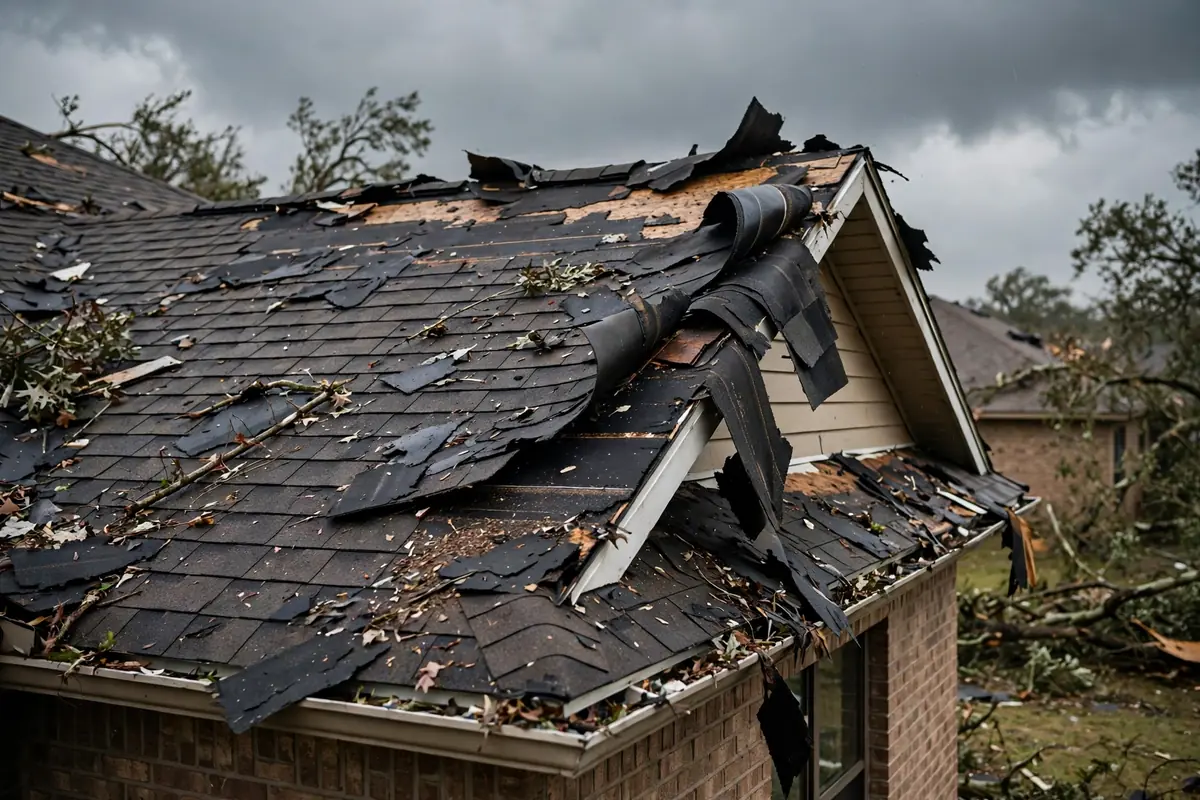
A Gulf storm passes, the rain stops, and then you find the stain on the ceiling. Filing an insurance claim for roof damage is the next step, and for many Texas City homeowners it is the most confusing part of the whole experience. What counts as storm damage? What should you photograph? What does the roofer's report need to say? This guide answers those questions in plain language, so you can move through the claim process with a clear record and fewer surprises.
One note before we start: this is general information about the claim process, not insurance advice and not a reading of your policy. Policies differ, and the details that matter are the ones in your own documents. Check your policy and talk to your agent when anything is unclear. Nothing here promises a claim outcome.
Hail damage vs wind damage: why the difference matters
Hail and wind damage look different, and insurers often treat them as different types of loss, so telling them apart helps your claim. Hail bruises shingles. It knocks granules off in round, dark spots, dents metal vents and gutters, and can crack skylight domes. The damage is often easy to miss from the ground, which is why a close inspection matters after any hailstorm.
Wind damage is more visible but sometimes subtler than it looks. High winds lift shingle tabs, break the seal underneath, crease shingles along the fold, and tear ridge caps. A shingle can look intact from the street while its seal is broken and nail holes sit exposed. Wind-driven rain then pushes water under shingles that appear fine. Both kinds of damage can appear after the same storm, and both deserve to be documented.
Why does the distinction matter? Your policy may handle wind and hail under different terms, deductibles, or exclusions, and the adjuster will classify what they see. Photos and a roofer's report that describe both the hail marks and the wind lifting give the adjuster a complete picture instead of a partial one. If you are unsure what you are looking at, our storm and hurricane damage repair page explains what an inspection checks after a storm.
Document everything before you clean up
Good documentation is the foundation of a smooth claim. Start as soon as it is safe, and before repairs or cleanup change the scene:
Photograph the roof from the ground. Capture missing shingles, lifted tabs, dented vents, damaged gutters, and debris in the yard. Take wide shots that show the whole slope and close shots of each damaged area.
Photograph the inside. Ceiling stains, drips, peeling paint, wet insulation, and attic damage all count. Photograph the attic with a flashlight, including the underside of the decking and any daylight showing through.
Record the storm details. Note the date and time of the storm, the kind of weather, hail size if you saw it, and when you first noticed the damage. News reports and weather service summaries can support the timeline.
Keep damaged materials. Save shingle pieces, flashing, and anything else that came off the roof. Do not throw evidence away before the adjuster has had a chance to see it.
Save every receipt. If you pay for emergency tarping or temporary repairs to stop further damage, keep the receipts and take before and after photos. Preventing further damage is generally expected, and the records show what was done and why.
Store copies of everything in two places, such as your phone and an email folder, so a lost device does not lose the claim file. A simple timeline, with dates and short notes, keeps the story straight months later if questions come up.
What a roofer's inspection report covers
A written inspection report turns what the roofer saw into a record the adjuster can use. A useful report covers the roof area by area: shingles, flashing, valleys, vents and pipe boots, skylights, and the attic and decking below. It notes the type and extent of damage in each area, with photos tied to each finding, so the adjuster can follow the evidence rather than take claims on trust.
The report should also describe the likely cause in plain terms, such as wind lifting, hail impact, or a failed seal, and list the recommended scope of repair. Measurements, material notes, and the overall condition of the roof help the adjuster separate storm damage from older wear. Ask for the report in writing, with photos, before any repair work starts. If emergency tarping is needed first, our emergency roof tarping page explains how that step works.
TWIA and WPI-8 basics for the Texas coast
Two terms come up often for coastal Texas roofs: TWIA and WPI-8. TWIA, the Texas Windstorm Insurance Association, is a state-created insurer that provides windstorm and hail coverage for properties in designated catastrophe areas along the Texas coast, including Galveston County, when that coverage is not available through the standard market. If your windstorm coverage comes through TWIA, your claim follows TWIA's process, and your agent can explain how it applies to your policy.
A WPI-8 is a certificate of compliance issued by the Texas Department of Insurance (TDI). It certifies that a structure, or a repair or improvement to it, complies with the windstorm building code requirements for the catastrophe area. TWIA generally requires a WPI-8 for eligibility, and certain repairs may need a windstorm inspection by a TDI-appointed qualified inspector while the work is underway. That inspection cannot always be done after the fact, so ask your agent and your roofer early whether a windstorm inspection applies to your repair.
Keep any WPI-8 certificates with your home records. They matter for future coverage and for buyers if you sell. The Texas Department of Insurance publishes storm and claim guidance for homeowners, and your agent remains the best source for how these rules apply to your specific policy and property.
Filing steps, in order
Review your policy. Find your windstorm and hail coverage, your deductible, and any deadlines for reporting damage. If anything is unclear, ask your agent before you file.
Contact your insurer promptly. Report the damage, describe what happened, and ask for a claim number and the next steps. Keep a note of every call: the date, the name of the person you spoke with, and what was said.
Meet the adjuster with your file ready. Have your photos, timeline, receipts, and the roofer's report on hand. Walk the adjuster through the damage and the attic if it is safe to do so.
Review the settlement against the repair scope. Compare what the settlement covers with the written repair scope from your roofer. If the two do not line up, ask your agent what options exist for review. Do not sign anything you do not understand.
Keep records until the work is done. Save the claim number, all letters and emails, photos, receipts, and the final repair paperwork together. If questions come up later, the file answers them.
Mistakes that slow a claim down
Waiting too long to report is the most common problem. Damage gets worse, evidence gets cleaned up, and timelines get harder to prove. Report promptly even if you are still gathering photos. Throwing away damaged materials before the adjuster sees them is another one. So is starting permanent repairs before the damage is documented, unless emergency work is needed to stop water coming in.
A third mistake is treating the first conversation as the final word. If a letter or estimate does not match what you documented, ask questions and ask for the reasoning in writing. Your agent works for you in this process, and a roofer's written report gives you something concrete to point to.
Start with the inspection
The claim process gets easier when the facts are clear, and the facts get clear with a thorough inspection and a written report. If a storm has damaged your Texas City roof, document what you can, then contact us for an inspection and a written account of what we find. If the damage raises the bigger question of repair versus replacement, our guide to roof repair vs replacement for a Texas City home walks through that decision.
And before the next storm season, our hurricane season prep guide lists the checks that reduce the chance of damage in the first place. A roof that is inspected, sealed, and ready before the season starts is far less likely to become a claim at all.